The Power of Hands-On Learning in STEM Education
Modern education constantly seeks effective ways to engage students. Teachers often struggle to make abstract concepts concrete. Consequently, hands-on learning has become a cornerstone of modern pedagogy. Students learn better when they build and create. They retain information longer when they apply it practically. Therefore, incorporating historical engineering projects into the curriculum is highly effective. One of the most captivating projects for students is the trebuchet design. This medieval siege engine offers a unique blend of history, physics, and mathematics. It challenges students to solve complex problems creatively.
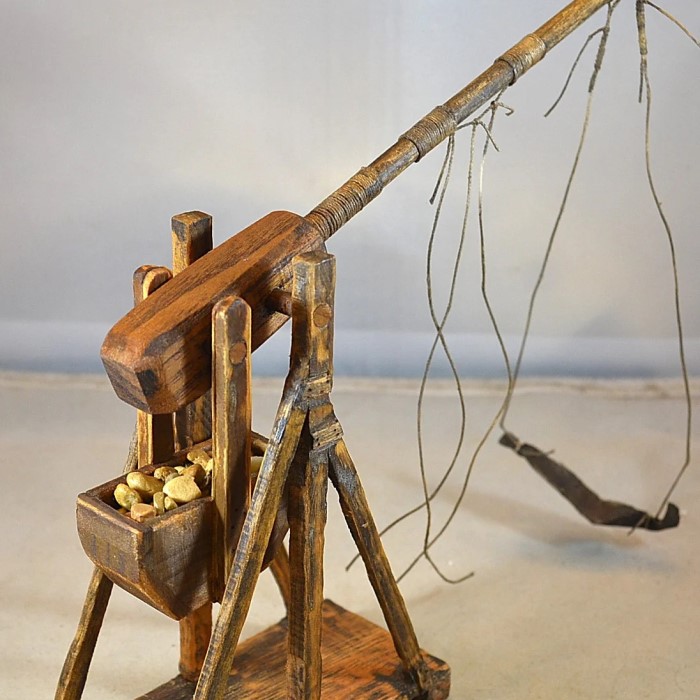
Furthermore, the process of building a trebuchet fosters teamwork. Students must collaborate to achieve a common goal. They share ideas and troubleshoot problems together. This social aspect of learning is crucial for development. Additionally, the immediate feedback provided by a launch is invaluable. If the projectile falls short, the design needs adjustment. This trial-and-error process teaches resilience. It encourages a growth mindset in young learners.
Moreover, the excitement of the launch creates a memorable experience. Textbooks cannot replicate the thrill of a successful launch. This emotional connection to the material enhances memory retention. Consequently, students are more likely to pursue STEM fields later in life. They see engineering as a dynamic and exciting discipline. In conclusion, the trebuchet serves as a perfect vehicle for interdisciplinary learning. It bridges the gap between theoretical knowledge and real-world application. By engaging in this project, students gain a deeper appreciation for the ingenuity of the past. They also develop critical skills for the future.
The Fundamental Physics Behind the Machine
Understanding the science is crucial for any successful build. A trebuchet is essentially a lever. It utilizes the principle of mechanical advantage. The machine converts potential energy into kinetic energy. This conversion happens rapidly during the firing process. Therefore, students must grasp the concept of energy conservation. The counterweight stores gravitational potential energy. When released, gravity pulls the heavy weight down. Consequently, the long arm of the lever swings upwards with great speed.
Additionally, the concept of rotational motion is central. The arm rotates around a pivot point. This pivot acts as a fulcrum. The short end of the arm holds the heavy counterweight. The long end holds the projectile. Because the long end moves faster than the short end, the projectile gains significant velocity. This explains the machine’s impressive range. Furthermore, the sling adds another layer of physics. It effectively extends the length of the throwing arm. This extension increases the leverage even further.
Moreover, students learn about efficiency and energy loss. No machine is perfectly efficient. Friction at the pivot point reduces performance. Air resistance slows the projectile. Therefore, students must analyze these factors. They learn to minimize friction through lubrication or better bearing design. They also learn about the importance of mass ratios. A heavier counterweight generally throws a projectile further. However, the mass of the arm itself plays a role. Too heavy an arm can slow down the transfer of energy. In summary, the trebuchet is a physics laboratory in motion. It demonstrates fundamental principles in a tangible way.
Historical Evolution of the Siege Engine
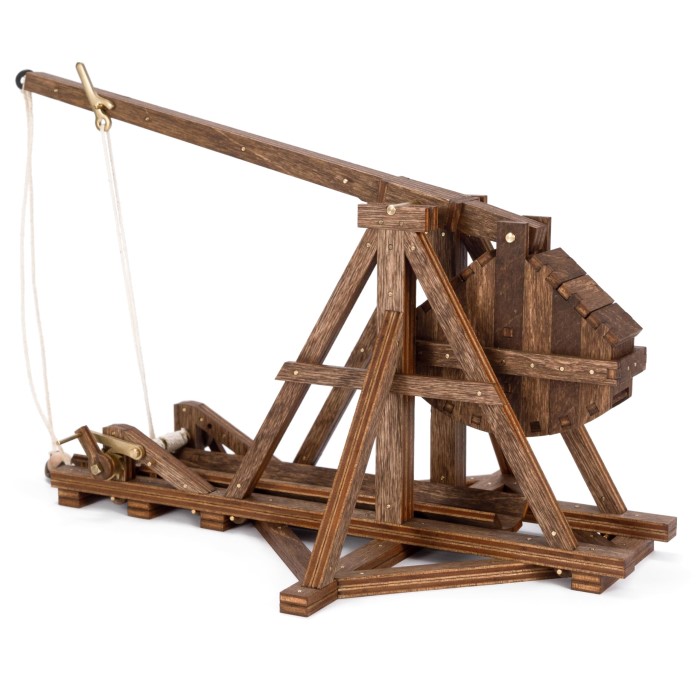
The trebuchet has a rich and violent history. It was the ultimate weapon of the Middle Ages. Unlike torsion catapults, trebuchets used gravity. This made them more reliable and powerful. Consequently, they could hurl massive stones over great distances. They were used to breach castle walls and terrorize defenders. Therefore, studying this machine connects students to medieval history. They learn about the technology of warfare and the challenges of siege warfare.
Initially, traction trebuchets were used. These machines relied on human muscle power. People pulled on ropes to swing the arm. However, the counterweight trebuchet was a significant advancement. It replaced human effort with a heavy weight. This allowed for heavier projectiles and greater consistency. Furthermore, the design evolved over centuries. Engineers experimented with different arm lengths and pivot points. They sought the perfect configuration for maximum destruction.
Moreover, the trebuchet represents the cutting-edge technology of its time. It shows that engineering has always shaped human conflict. Students can compare these ancient machines to modern artillery. They can discuss the ethical implications of engineering. They can reflect on how technology changes the nature of war. Additionally, building a model connects them to the engineers of the past. They face similar challenges on a smaller scale. They must deal with structural integrity and material limitations. In conclusion, the historical context adds depth to the project. It transforms a physics lesson into a journey through time.
Key Components of a Successful Trebuchet Design
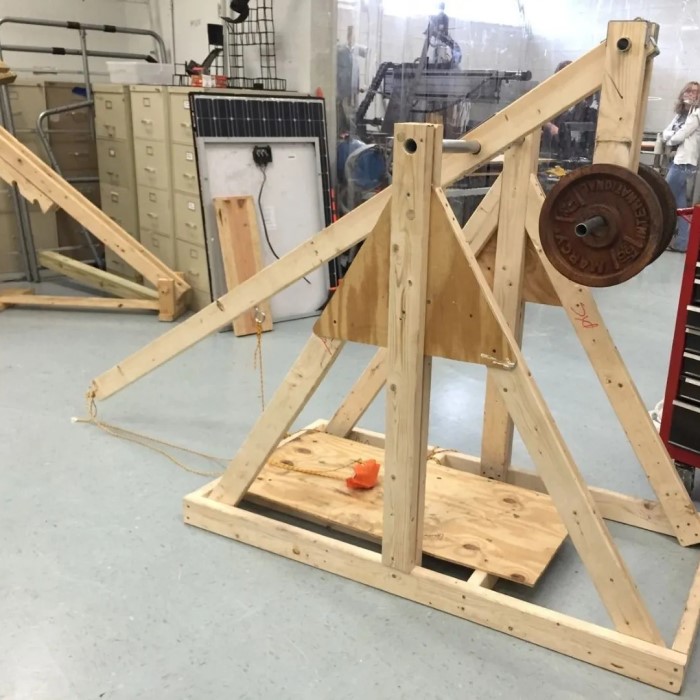
Creating an effective trebuchet design machine requires attention to detail. Every component plays a vital role in performance. The frame is the foundation of the structure. It must be strong and stable. A wobbly frame will absorb energy and reduce throwing distance. Therefore, students must learn about structural engineering. They need to use triangles for rigidity. They must ensure the base is wide enough to prevent tipping.
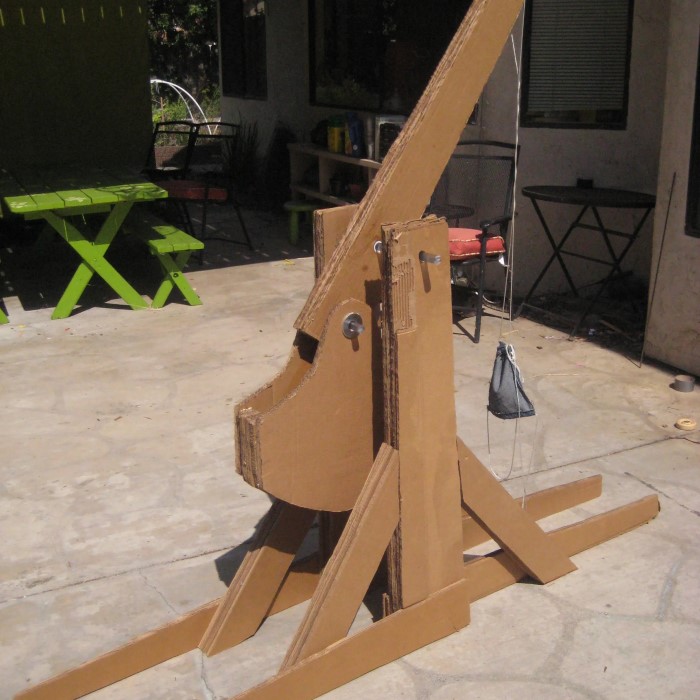
The pivot point is another critical element. It must allow for smooth rotation. Friction here is the enemy of distance. Consequently, students often use ball bearings or polished steel rods. The height of the pivot also matters. A higher pivot allows for a longer arm. This increases the potential speed of the projectile. Furthermore, the ratio of the arm lengths is crucial. The short end holds the counterweight. The long end holds the sling. Finding the optimal ratio is a key part of the trebuchet design process.
The sling is often the most misunderstood part. It acts as a flexible extension of the arm. The length of the sling affects the release angle. A shorter sling releases earlier. A longer sling releases later. Therefore, students must experiment to find the perfect length. Additionally, the release mechanism is vital. It must hold the projectile securely during the swing. Yet, it must release it at the precise moment. Usually, a simple loop of string slips off a pin. The angle of this pin is adjustable. In summary, success lies in the details. Each part must work in harmony with the others.
Step-by-Step Guide to Classroom Construction
Building a trebuchet in class requires careful planning. First, divide the students into teams. This promotes collaboration and shared responsibility. Provide them with the necessary materials. Wood, PVC pipe, and string are common choices. However, ensure safety equipment is available. Goggles should be worn during cutting and drilling. Consequently, the first step is safety training. Students must learn how to use tools correctly.
Next, guide them through the planning phase. They should sketch their designs on paper. They need to calculate dimensions and ratios. This is where math skills come into play. Once the plans are approved, construction begins. Students cut the frame pieces. They assemble the base and the uprights. Then, they construct the throwing arm. This step requires precision. A poorly balanced arm will wobble. Therefore, encourage them to measure twice and cut once.
After the structure is built, they attach the pivot and the sling. This is the time for adjustment. They will likely need to modify their initial design. The sling length might need changing. The counterweight might need adjusting. This iterative process is the heart of engineering. Furthermore, document the process. Have students keep a build log. They should record their changes and the results. In conclusion, the construction phase is chaotic but rewarding. It teaches practical skills and patience. It brings their theoretical plans to life.
Adapting the Project for Different Age Groups
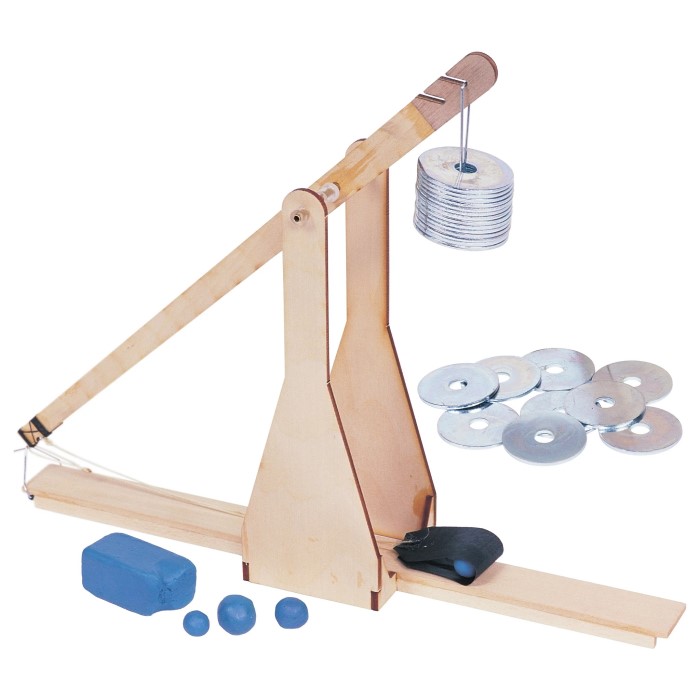
The trebuchet project is highly adaptable. It can be simplified for younger students. It can also be made complex for university engineering students. For elementary students, focus on the basic concepts. Use simple materials like cardboard or LEGO bricks. The goal is to understand the lever action. They can observe how a heavier weight throws the ball further. Therefore, the focus is on qualitative observation. They learn through play and experimentation.
For middle school students, introduce more math. They can calculate the potential energy of the counterweight. They can measure the throwing distance. Then, they can graph the results. This introduces data analysis. Furthermore, they can experiment with different sling lengths. They can see the direct relationship between the variables. Consequently, the project becomes an exercise in the scientific method. They formulate hypotheses and test them.
High school and college students can delve deeper. They can use computer simulations. These programs model the trajectory of the projectile. Students can optimize their designs digitally before building. Additionally, they can study advanced concepts. They might explore the efficiency of the energy transfer. They could calculate the theoretical maximum range. In summary, the project scales effectively. It meets the learning needs of any age group. It remains challenging and engaging for everyone.
Troubleshooting Common Design Flaws
Students will inevitably encounter problems. Identifying these issues is part of the learning process. One common problem is the projectile falling short. This often results from a counterweight that is too light. Alternatively, the arm ratio might be incorrect. Therefore, students must diagnose the root cause. They should adjust one variable at a time. This systematic approach is fundamental to engineering.
Another frequent issue is the projectile flying backwards. This is usually a sling problem. The release is happening too late. Or, the sling is too long. Consequently, the projectile hits the ground behind the trebuchet design. Students must shorten the sling. Or, they must adjust the release pin angle. This angle controls when the sling opens. It is a delicate balance. Furthermore, the frame might tip over during the launch. This indicates a stability issue. The base is too narrow or the counterweight is too heavy.
Friction is another silent enemy. If the arm does not swing freely, energy is wasted. Students should check the pivot point. They should look for rubbing or binding. Lubrication often solves this problem. Additionally, the projectile might drag in the trough. This slows it down before the launch. Therefore, ensure the path of the sling is clear. In conclusion, troubleshooting teaches resilience. It forces students to analyze failure. They learn that failure is just a step towards success.
Frequently Asked Questions About Trebuchets
Many questions arise during this project. Here are answers to some common queries.
What is the golden ratio for a trebuchet?
The “golden ratio” usually refers to the arm length ratio. The optimal ratio is generally considered to be 1:4. This means the short end of the arm is one unit long. The long end is four units long. However, this is just a starting point. The perfect ratio depends on other factors. The mass of the counterweight and the projectile matter. Therefore, students should experiment around this ratio. They might find a slightly different ratio works better for their specific build.
What are the three types of trebuchets?
There are three main historical types. The first is the traction trebuchet. It uses human power to pull the arm down. The second is the fixed counterweight trebuchet. This uses a heavy weight attached to the short arm. The third is the hinged counterweight trebuchet. This design allows the weight to swing. This swinging motion increases efficiency. It allows the weight to fall more vertically. Consequently, it transfers more energy to the projectile.
What are some unique trebuchet designs?
Modern enthusiasts have created unique trebuchet designs. The “floating arm” trebuchet is one example. The entire machine rolls on wheels during the launch. This reduces the stress on the frame. It also improves efficiency. Another design is the “King Arthur” trebuchet. It uses a secondary rotating arm. This increases the speed of the sling. Furthermore, some designs use multiple arms. These can be very complex but powerful. Students can research these for advanced projects.
Conclusion
The educational value of this project is immense. It transcends simple model building. It immerses students in a world of physics and history. They learn to work together and solve problems. They experience the satisfaction of seeing their hard work pay off. A well-executed trebuchet design does more than throw a ball. It launches a student’s curiosity. It ignites a passion for learning that can last a lifetime. Therefore, educators should embrace this powerful tool. It turns the classroom into a dynamic workshop of discovery.