Introduction: The Joy of Learning Piano
Learning to play the piano can be an incredibly rewarding experience. It offers a unique way to express creativity, relieve stress, and even improve cognitive skills. However, many beginners often wonder how to learn piano effectively. In 2025, with the rise of technology and various learning resources, it is easier than ever to start your musical journey. This article explores effective tips for beginners who are eager to learn piano, combining traditional techniques with modern practices.

Why Learn to Play the Piano?
Learning to play the piano offers many rewards. It is a skill that combines creativity, discipline, and focus. Playing the piano improves mental health and reduces stress. It provides a strong sense of accomplishment.
One important benefit is enhanced cognitive abilities. Research shows that learning piano improves memory and problem-solving skills. It also helps with better coordination between the hands and eyes. These benefits can extend to other areas of life, including academics and work.
Piano playing nurtures emotional expression. Music is an excellent way to communicate feelings. It allows you to connect with others and share your story through melodies.
Socially, piano playing helps strengthen relationships. You can play at gatherings, impress others, or even form meaningful connections through music. It creates memorable experiences for everyone involved.
Additionally, piano skills have a positive impact on discipline. Regular practice requires dedication and patience. Over time, these qualities translate into other aspects of life. They teach time management and perseverance.
For those passionate about music, the piano provides limitless opportunities. You can explore various genres, from classical to jazz to pop. It’s an incredibly versatile instrument for solo or group performances.
Whether you are young or old, it’s never too late to start. The journey of how to learn piano is an enriching experience. It combines the joy of music with lifelong benefits. Begin your piano learning journey and unlock a world of possibility!
Choosing the Right Piano for Beginners
Picking the right piano is crucial for a successful learning journey. Beginners should find an instrument that suits their needs and comfort. There are two main types of pianos to consider: acoustic and digital.
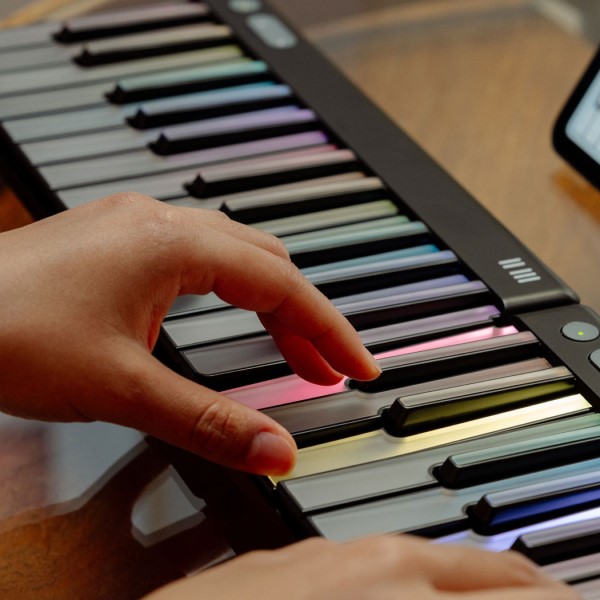
Acoustic vs. Digital Pianos
Acoustic Pianos
- Rich Sound Quality: Acoustic pianos produce warm, authentic tones.
- Traditional Feel: Their keys give a responsive touch that many pianists prefer.
- Durability: They are built to last for generations with proper care.
- Size and Maintenance: These pianos are larger, require tuning, and can be expensive.
Digital Pianos
- Compact Design: They are smaller and take up less space.
- Affordable: Digital pianos are often more budget-friendly than acoustic ones.
- Features and Connectivity: Many offer additional features like sound variations and connection to apps.
- No Maintenance: No need for tuning and easier upkeep.
Tips to Choose a Beginner Piano
- Budget: Set a clear budget before purchasing a piano.
- Test Keys: Play the keys to ensure the touch feels comfortable.
- Consider Your Space: Choose a piano that fits well in your home.
- Sound Quality: Prioritize tone clarity and consistency.
- Professional Advice: Seek guidance from a teacher or experienced players.
Conclusion
Starting your journey of how to learn piano begins with choosing the right instrument. Whether it’s acoustic or digital, the piano should match your needs and style. Investing time in selecting the perfect piano ensures an enjoyable learning experience. Make your decision carefully to support your musical goals.
Basics of Piano Layout and Notes
Understanding the piano layout and notes is important for beginners in learning the piano. The keyboard consists of black and white keys arranged in a specific pattern. Knowing this pattern will make playing music more straightforward.

The Keyboard Layout
- Keys Arrangement: A standard piano usually has 88 keys – 52 white and 36 black.
- Repeating Pattern: The keys follow a repetitive 12-note pattern: seven white and five black keys.
- Octaves: Each set of 12 notes is called an octave, and there are seven octaves.
- Middle C: The middle C key is an easy way to find your place on the keyboard. It sits roughly in the center of the keyboard and is often marked.
Black and White Keys
- White Keys: They represent natural notes – A, B, C, D, E, F, and G.
- Black Keys: They are sharps (#) and flats (b), nestled between certain white keys.
- Groups of Black Keys: These come in alternating groups of two and three.
Identifying Notes
- Start with the C Key: It is found just to the left of each group of two black keys.
- Sequential Order: After C, the white keys proceed alphabetically – D, E, F, G, A, B.
- Repeat the Cycle: This pattern repeats across all octaves on the keyboard.
- Sharps and Flats: Sharps are a half note higher, while flats are a half note lower.
Learning Techniques
- Label Keys: Use stickers or markers to label each key initially.
- Practice Scales: Play simple scales to become familiar with the notes.
- Match to Sheet Music: Practice matching the notes to their corresponding sheet music notations.
- Use Visual Aids: Online diagrams and apps can help reinforce the layout and notes.
Understanding the piano layout is the first step in your journey of how to learn piano. With practice, recognizing the keys and notes will become second nature. This knowledge is the foundation for more complex skills and musical enjoyment.
Developing Proper Hand Posture and Technique
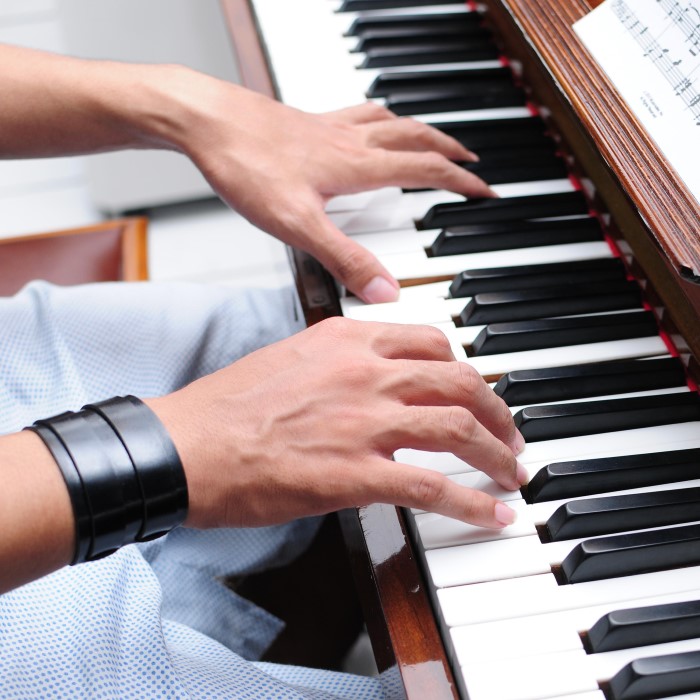
Proper hand posture and technique are essential when learning how to play the piano. They help improve performance and prevent injuries. Developing this foundation early ensures faster progress and more enjoyable playing.
Importance of Hand Posture
- Prevents Injury: Correct posture reduces strain on your hands and wrists.
- Improves Accuracy: Proper technique helps hit the right keys consistently.
- Supports Speed: Correct positioning enhances finger movement and dexterity.
- Builds Good Habits: Starting with good posture makes learning piano easier.
Basics of Proper Piano Hand Posture
- Relax Arms: Keep your arms loose and free of tension.
- Straight Wrists: Avoid bending your wrists up or down.
- Curved Fingers: Maintain a natural curve in your fingers.
- Thumb Position: Rest your thumb gently against the keys.
- Sit Correctly: Keep your back straight and sit at the right height.
Practicing Technique
- Finger Exercises: Begin with simple drills to strengthen your fingers.
- Play Slowly: Focus on accuracy rather than speed while practicing.
- Use Scales: Practice scales to improve finger coordination and flow.
- Observe Hand Shape: Check your hands periodically to maintain correct positioning.
- Watch Wrist Movement: Ensure your wrists stay relaxed during playing.
Common Mistakes to Avoid
- Tensed Fingers: Keep fingers relaxed to ease movement.
- Hovering Fingers: Avoid lifting fingers too high above the keys.
- Slouching: Maintain upright posture to maximize hand control.
- Fixed Wrists: Let wrists move freely when playing.
- Skipping Warm-ups: Always start with warm-up exercises to prepare your hands.
Conclusion
Mastering proper hand posture and technique is vital to learning the piano. Practice regularly and focus on correct positioning. These habits will help you play with ease, accuracy, and confidence. Remember, consistency is key to improving your skills.
Learn to Read Sheet Music and Musical Notations
Learning to read sheet music is an essential part of how to learn piano. It may seem overwhelming at first, but with consistent practice, you will improve quickly. Understanding musical notations allows you to interpret and play a variety of songs. Below are the basics you need to get started.
What is Sheet Music?
- Definition: Sheet music is a visual representation of music using notes and symbols.
- Staff: It has five lines and four spaces where notes are placed.
- Clefs: Treble and bass clef indicate the pitch of notes.
- Note Symbols: Different note shapes show the length and timing of each sound.
- Other Markings: Symbols for dynamics, tempo, and expression guide how to play.

Understanding Musical Notations
- Pitch Marks: Notes indicate sound frequency and are labeled A, B, C, D, E, F, G.
- Note Duration:
- Whole note lasts four beats.
- Half note lasts two beats.
- Quarter note lasts one beat.
- Rests: Symbols for silence in music.
- Accidentals: Sharps (#) and flats (b) modify pitch by a half step.
- Time Signature: Shows beats per measure (e.g., 4/4).
- Key Signature: Tells which notes are sharp or flat in the piece.
Tips to Learn Sheet Music
- Start Small: Begin with simple melodies and basic sheet music.
- Learn Notes: Memorize the position of notes on the staff and keyboard.
- Practice Sight-Reading: Play new sheet music regularly to improve reading speed.
- Use Flashcards: Quiz yourself on music notes and symbols.
- Follow Rhythms: Tap the beat to master timing and rhythm.
- Study Patterns: Look for scales and chord progressions within sheet music.
Exercise to Master Musical Notations
- Identify Notes: Label notes on blank sheet music.
- Count Aloud: Speak the rhythm while tapping your fingers.
- Play Simple Songs: Use beginner-friendly sheet music.
- Write Music: Compose small pieces to understand the notations.
- Use Apps and Tools: Practice with digital music apps for interactive learning.
Conclusion
Reading sheet music and understanding musical notations are vital steps to learn piano. Start with simple exercises and gradually build your skill through regular practice. Familiarity with sheet music ensures you can play diverse songs and fully enjoy your piano journey.
Tips for Practicing Efficiently
Efficient piano practice is key to developing skills quickly and effectively. By following these tips, you can make the most of your practice time and learn piano faster.
Establish a Routine
- Set a Schedule: Practice at the same time daily to build consistency.
- Short Sessions: Focus on 20-30-minute sessions for better concentration.
- Start Simple: Begin with warm-up exercises to prepare your fingers and mind.
Break Down Practice Goals
- Focus Areas: Work on specific techniques or challenging sections of a song.
- Set Milestones: Divide songs or pieces into smaller sections to master step by step.
- Track Progress: Record your practice session to monitor improvement.
Use Effective Practice Techniques
- Slow Play: Start slowly to master accuracy before increasing speed.
- Repeat Sections: Play difficult parts multiple times till perfected.
- Hands Separately: Practice with each hand independently before combining them.
- Visualize Notes: Imagine the arrangement and flow of notes before playing.
Stay Focused
- Choose a Quiet Space: Avoid distractions while practicing.
- Set Clear Goals: Identify one or two tasks to work on before starting.
- Stay Positive: Celebrate small achievements to stay motivated.
Engage With Resources
- Use a Metronome: Improve timing and rhythm using a metronome.
- Work with Sheet Music: Practice sight-reading regularly to boost your reading skill.
- Online Tutorials: Watch videos or use apps for guided practice.
Additional Suggestions
- Stretch Fingers: Relax your hands before and after practice.
- Take Breaks: Rest for 5 minutes after every session.
- Experiment: Play different songs to build confidence and keep learning fun.
Conclusion
Efficient practice transforms how to learn piano into a rewarding experience. Set a clear routine and make steady improvements through daily focused effort. Small steps lead to big progress in mastering this beautiful instrument.
Beginner-Friendly Piano Exercises and Songs
Starting your piano journey can be exciting and enjoyable. Practicing beginner-friendly exercises and songs will help you build confidence and improve your skills. Below are some simple exercises and songs for new piano players.
Piano Exercises for Beginners
- Five-Finger Patterns: Place your fingers on five consecutive keys and play them back and forth. This helps train finger coordination and familiarizes you with the keyboard layout.
- Scales Practice: Start with the C major scale as it uses only white keys. Play slowly, and focus on your finger placement.
- Arpeggios: Practice playing notes of a chord one at a time. This will improve control and dexterity.
- Wrist Relaxation Drills: Play a series of repetitive notes while keeping your wrists relaxed. It prevents tension.
- Rhythmic Patterns: Practice simple rhythms by repeating short note patterns. Clap the rhythms first, then play them.
Easy Songs to Start With
- “Twinkle, Twinkle, Little Star”:
- A famous nursery rhyme for beginners.
- The simple melody uses repetitive note patterns.
- “Ode to Joy” by Beethoven:
- A well-known classical piece, perfect for novices.
- Focus on playing each note clearly.
- “Mary Had A Little Lamb”:
- A simple melody that’s easy to follow.
- Great for practicing finger movements on white keys.
- “Happy Birthday”:
- A universal tune helpful for familiarizing yourself with basic rhythms.
- “Chopsticks”:
- A fun, two-note piece for building coordination with both hands.
Tips for Practicing Songs
- Slow Down: Play songs slowly to focus on accuracy and timing.
- Divide into Sections: Practice one small section at a time.
- Repeat and Refine: Repeat until you feel comfortable before moving to the next part.
- Sing Along: Sing the tune to improve your ear and rhythm.
- Use a Metronome: Keep a steady beat when practicing.
Conclusion
These beginner-friendly exercises and songs make learning how to play piano simpler. Practice regularly and have fun with easy songs. Over time, you’ll see steady improvement and gain confidence in your piano skills. Happy playing!
Setting and Achieving Your Piano Learning Goals
Setting clear goals is a crucial step in learning how to play the piano. Goals provide direction and keep you motivated throughout your piano journey. Let’s explore how to set realistic goals and achieve them successfully.
Define Your Piano Goals
- Determine Your Purpose: Decide why you want to learn the piano. Are you learning as a hobby, for a career, or to play specific songs?
- Set Short-Term Goals: Identify what you want to achieve in the next few weeks or months. For example, mastering a basic song or learning to read sheet music.
- Set Long-Term Goals: Think about what you would like to achieve within a year or more. Examples include advancing to an intermediate level or learning complex pieces.
- Be Specific: Instead of setting vague goals like “play piano better,” aim for targeted objectives such as “practice scales for 10 minutes daily.”
Make a Plan
- Create a Schedule: Dedicate specific time each day for your piano practice. Consistency is key to progress.
- Break Down Goals: Divide big goals into smaller, manageable tasks.
- Use a Practice Journal: Track your progress to see improvements and adjust your plan if necessary.
- Set Deadlines: Deadlines provide motivation to stay on track with your learning.
Stay Motivated
- Celebrate Small Wins: Acknowledge every achievement to stay encouraged.
- Stay Patient: Understand that learning piano takes time and persistence.
- Find Inspiration: Listen to your favorite piano music for motivation.
- Stay Positive: Focus on progress rather than perfection.
Seek Support
- Get a Teacher: A piano teacher offers guidance and feedback to help you improve.
- Join a Community: Connect with other learners for support and motivation.
- Learn from Resources: Use online tutorials, videos, and apps to supplement your lessons.
- Ask for Feedback: Always ask for constructive criticism to better your skills.
Reassess and Adjust Goals
- Review Regularly: Evaluate your progress every few weeks.
- Set New Goals: Adjust your goals as you improve or face challenges.
- Stay Flexible: Change your approach to suit your learning pace or new interests.
Conclusion
Setting and achieving your piano learning goals is a fulfilling process. By defining clear objectives, creating a practical plan, and staying motivated, you can steadily progress in your journey of how to learn piano. Regularly revisit and adjust your goals to keep moving forward and enjoy the process. Remember, every step brings you closer to mastering the piano.