The Timeless Appeal of Seasonal Decor
The arrival of spring brings a desire for renewal and freshness. Consequently, many homeowners look for ways to brighten their living spaces. One of the most effective ways to welcome the season is by updating your front door. Spring wreaths serve as a perfect focal point for this update. They instantly add color and life to an otherwise plain entrance. Furthermore, making your own wreath is a rewarding experience. It allows you to express your personal style uniquely. You can choose specific flowers and colors that match your home’s exterior.
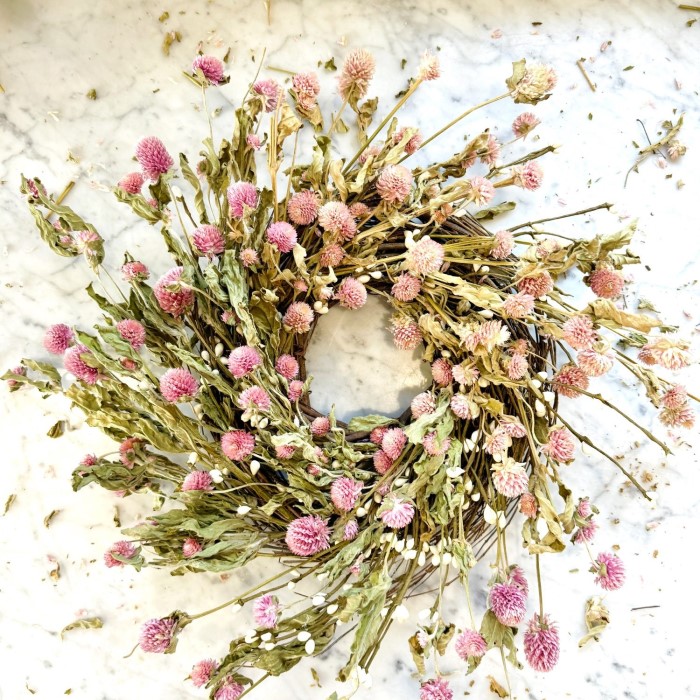
Additionally, crafting is a fantastic stress reliever. The process of arranging natural elements brings a sense of calm. Therefore, creating a wreath is beneficial for both your home and your mind. Many people believe that crafting is difficult or messy. However, modern techniques make it accessible for everyone. You do not need professional skills to achieve professional results. With a few simple tools and some creativity, you can build a masterpiece. This article will guide you through the entire process. We will explore materials, designs, and maintenance tips. Ultimately, you will gain the confidence to craft your own stunning decor.
Essential Tools and Materials for Success
Before you begin your project, gathering the right supplies is crucial. Having everything ready ensures a smooth crafting experience. You do not want to stop in the middle to search for scissors. Therefore, preparation is the first step toward success.
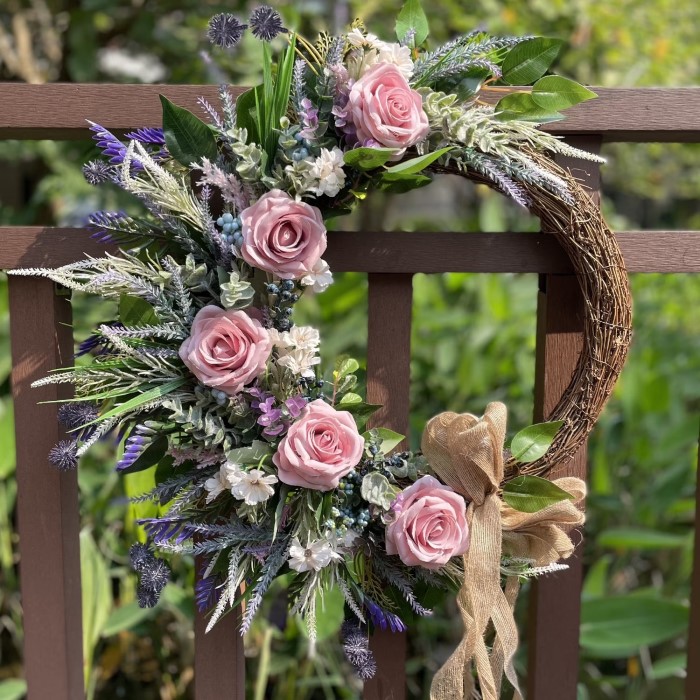
- Wreath Base: This is the foundation of your design. You can choose from grapevine, wire, or straw bases. Grapevine bases offer a rustic, natural look. Wire frames are versatile and allow for precise placement.
- Cutting Tools: Sharp scissors or wire cutters are essential. You will need them to trim stems and cut ribbons. Dull tools can crush delicate stems. Therefore, invest in high-quality cutters.
- Adhesives: A hot glue gun is a crafter’s best friend. It secures heavy items quickly. However, be careful not to burn your fingers. Floral tape is also useful for wrapping stems.
- Decorative Elements: This is where your creativity shines. You will need artificial flowers, greenery, and ribbons. Choose high-quality silk flowers for a realistic appearance. Additionally, consider adding decorative eggs or small birds for a whimsical touch.
- Wire and Picks: Floral wire helps secure heavy items. Floral picks can extend short stems. These small tools provide stability to your arrangement.
Gathering these items beforehand saves time and frustration. Consequently, you can focus entirely on the artistic process.
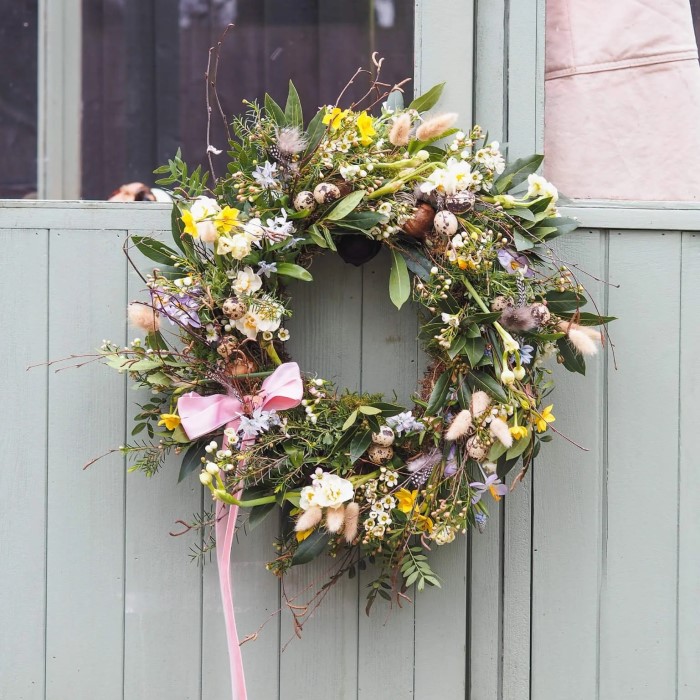
Choosing the Perfect Color Palette
Selecting colors is one of the most exciting parts of designing. The right palette sets the mood for your entire home. Spring is associated with brightness and vibrancy. However, you should choose colors that complement your existing decor.
- Pastel Shades: Soft pinks, blues, and yellows are classic choices. They evoke a sense of gentle renewal. These colors work well with traditional home styles.
- Bold and Bright: If you prefer a modern look, go for vivid hues. Bright oranges, deep purples, and sunny yellows make a statement. They stand out against neutral doors.
- Monochromatic Schemes: Using different shades of one color creates sophistication. For example, a wreath made entirely of white flowers and greenery looks elegant. This approach is timeless and chic.
- Complementary Colors: Look at a color wheel for guidance. Pairing opposite colors, like purple and yellow, creates high contrast. This technique makes the wreath visually “pop.”
- Natural Tones: Earthy tones are increasingly popular. Use preserved moss, eucalyptus, and twigs. This style brings the tranquility of nature to your doorstep.
Ultimately, trust your instincts when choosing colors. If you love a specific combination, it will likely look wonderful.
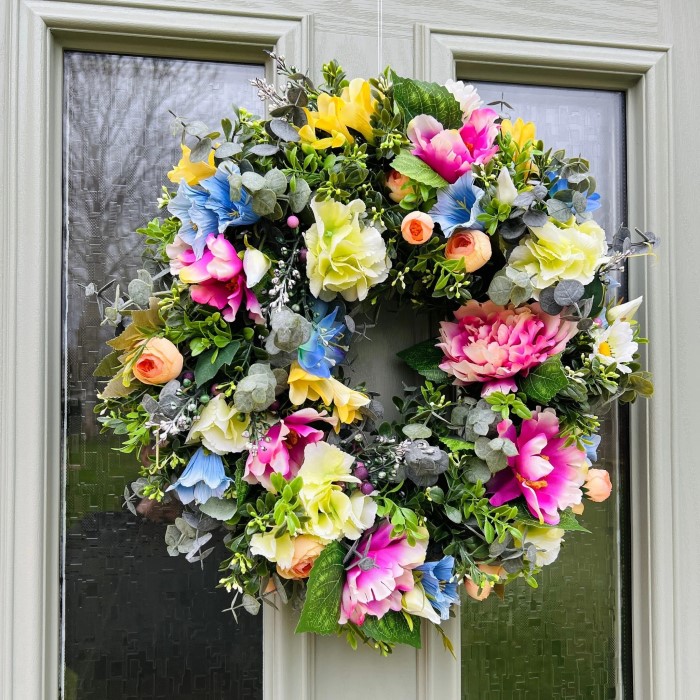
Mastering the Art of Floral Arrangement
Arranging the elements is where your wreath comes to life. You should not simply stick flowers into the base randomly. Instead, you should follow a design plan. This ensures a balanced and professional look.
- Start with Greenery: Always build your foundation with leaves first. Place larger leaves around the base to create volume. This step hides the mechanics of the base. Furthermore, it provides a backdrop for your flowers.
- Create a Focal Point: Decide where you want the main attraction. Usually, the bottom or the side of the wreath is best. Cluster your largest flowers in this area. This draws the eye immediately.
- Work in Odd Numbers: Designers often group items in threes or fives. Odd numbers look more natural and organic. Avoid symmetrical placement unless you want a formal look.
- Layer Your Elements: Place some flowers deeper into the wreath. Let others protrude outward. This creates depth and dimension. A flat wreath looks two-dimensional and boring.
- Vary the Directions: Do not point all stems in the same direction. Let some flow clockwise and others counter-clockwise. This mimics how plants grow in nature.
By following these principles, you transform a pile of supplies into a cohesive work of art. Consequently, your wreath will look curated rather than cluttered.
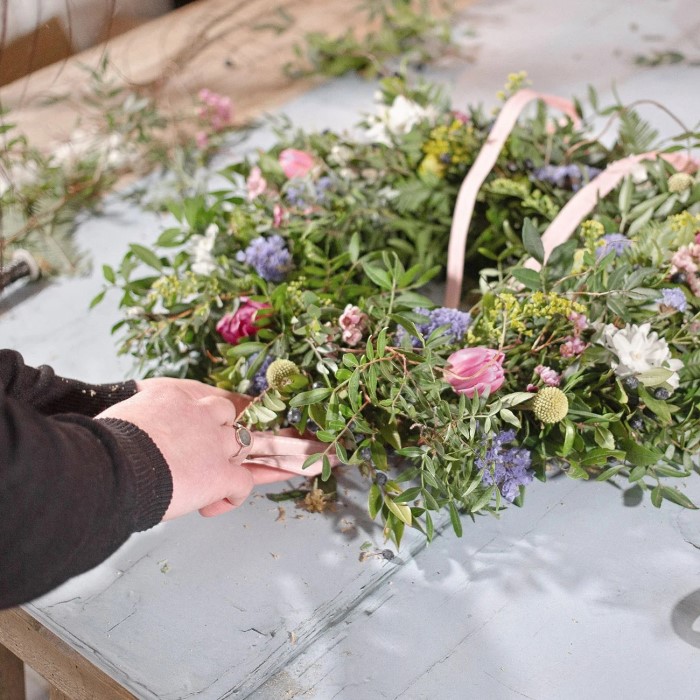
Step-by-Step Guide to a Grapevine Wreath
Grapevine spring wreaths are a favorite among crafters. They are sturdy and provide excellent support for stems. Here is a simple guide to creating your first masterpiece.
- Prepare the Base: Clean the grapevine to remove loose debris. You can spray paint it if you want a different background color. However, the natural wood look is usually best.
- Insert Greenery: Tuck ferns or eucalyptus stems into the vines. You usually do not need glue for this step. The tight weave of the vines holds the stems securely. Work your way around the circle.
- Add the Largest Flowers: Cut the stems of your main flowers to about three inches. Insert them into the vines near the greenery. Arrange them in a loose triangle shape. This creates a pleasing visual flow.
- Fill in the Gaps: Add smaller flowers and filler plants. Baby’s breath or wax flowers are excellent choices. They add texture without overwhelming the design.
- Secure Loose Items: Check for any wobbly stems. Use a small amount of hot glue to secure them. Be discreet with the glue so it remains hidden.
- Add a Bow: Create a large bow with wired ribbon. Attach it to the focal point with floral wire. The ribbon adds a finishing touch of softness.
Finally, hang your creation with pride. You have successfully crafted a beautiful decoration.
Exploring Alternative Base Options
While grapevine is classic, many other bases offer unique looks. Experimenting with different foundations can expand your creativity. Each type of base offers distinct advantages for your design.
- Wire Frames: These metal frames are lightweight and durable. They often have cross-sections for attaching materials. You can use floral tape to attach stems. Alternatively, you can wrap the entire frame in fabric. This technique creates a soft, padded look.
- Straw Wreaths: Straw forms are very affordable. They provide a rustic texture. However, they can be messy if the plastic wrapping is removed. It is often best to keep the plastic on and glue materials to it. This prevents straw from shedding.
- Styrofoam Rings: These are perfect for covering entirely with moss or fabric. You can pin items directly into the foam. They are ideal for lightweight designs. However, they are not suitable for heavy items unless reinforced.
- Embroidery Hoops: A modern trend involves using wooden embroidery hoops. You can stretch fabric across the hoop. Then, attach flowers to the outer edge. This creates a minimalist and trendy aesthetic.
Choosing the right base is essential for the longevity of your wreath. Therefore, consider the weight of your decorations before selecting a foundation.
Maintaining Your Creation for Longevity
You want your beautiful wreath to last for many seasons. Proper care and maintenance are necessary to preserve its appearance. Since many spring wreaths are displayed outdoors, they face environmental challenges.
- Protect from Sunlight: Direct sunlight can fade colors over time. If your door receives intense afternoon sun, consider a shaded spot. Alternatively, use UV-resistant spray on your flowers. This clear coat acts as sunscreen for your decor.
- Moisture Control: Rain can damage certain materials. If you use a grapevine base, moisture can cause mold. Ensure your wreath dries quickly after rain. Furthermore, avoid using water-soluble glues on outdoor spring wreaths.
- Dust Regularly: Dust accumulates on artificial flowers. Use a feather duster or a can of compressed air to clean it. Do this gently to avoid dislodging petals.
- Storage Solutions: When the season ends, store your wreath properly. Place it in a plastic storage bin. Avoid crushing it with heavy items. You can also hang it on a wall in a closet.
By taking these simple steps, you protect your investment of time and money. Consequently, your wreath will remain vibrant and beautiful year after year.
Inspiring Themes for Every Home
Sometimes the hardest part is deciding on a theme. There are countless directions you can take. Here are a few inspiring ideas to spark your imagination.
- The Bird’s Nest: Focus on nature. Use twigs, moss, and speckled eggs. Tuck a small bird figurine into the arrangement. This theme celebrates new life and is very charming.
- The Berry Bounty: Use stems of artificial berries in bright colors. Red or pink berries look stunning against green leaves. This style is festive and works well for late spring.
- The Citrus Burst: Incorporate faux lemons, limes, or oranges. This theme is refreshing and energetic. It pairs beautifully with bright yellow flowers and lush greenery.
- The Elegant Monogram: Personalize your wreath with a large letter. Paint a wooden letter to match your flowers. This adds a custom touch that guests will admire.
- The Succulent Garden: Use artificial succulents for a modern look. These plants come in unique shapes and colors. They require very little water in real life. Therefore, they symbolize endurance and resilience.
Choose a theme that resonates with your personality. Your home should reflect who you are.
Conclusion
Creating your own decor is a fulfilling journey. Spring wreaths offer a fantastic opportunity to personalize your space. They bring the joy of the season right to your front door. We have explored the essential tools, design principles, and maintenance tips. You now have the knowledge to start crafting with confidence. Remember that perfection is not the goal. The goal is to enjoy the process and express yourself. So, gather your materials and let your creativity flow. Your beautiful, handcrafted masterpiece awaits.
FAQ
What types of wreaths are there?
There are many types of spring wreaths available for different seasons and styles. Common base materials include grapevine, wire, straw, and Styrofoam. Styles range from floral and greenery wreaths to fabric and ribbon designs. You can also find themed spring wreaths for holidays like Christmas, Easter, and Halloween. Each type offers a unique look for your home decor.
How to create a spring wreath?
To create a spring wreath, start by selecting a base like grapevine or wire. Next, gather your materials, including artificial flowers, greenery, and ribbon. Begin by attaching the greenery to the base using floral wire or hot glue. Then, add your focal flowers, distributing them evenly or clustering them for impact. Finally, add filler flowers and a bow to complete the look.
What can you use instead of a spring wreath?
If you prefer an alternative to a traditional wreath, consider a door swag or a hanging basket. A framed chalkboard or a decorative metal sign can also look stylish. Some people use a seasonal garland draped over the door. Others opt for a monogram letter decorated with flowers. These alternatives provide unique ways to decorate your front door.