Introduction
Fleece fabric has grown in popularity for crafting tie blankets, particularly due to its soft texture, warmth, and versatility. Whether you are looking to create a cozy throw for your home, make a thoughtful gift, or even craft something special for a charity, using fleece fabric for tie blankets is an excellent choice. In this tutorial, we will explore the benefits of fleece, guide you through the materials needed, and provide a step-by-step process to help you create your very own tie blanket. This project is suitable for crafters of all skill levels, making it a fun and rewarding endeavor!
The Benefits of Using Fleece Fabric
When it comes to making tie blankets, choosing the right fabric is essential. Here are several advantages of using fleece:
- Softness and Comfort
Fleece is renowned for its luxurious softness, providing warmth and coziness. This makes it an ideal fabric for blankets that you want to snuggle up with on colder days. - Durability
High-quality fleece is incredibly durable, meaning your tie blanket can withstand the test of time. It can endure regular use and multiple washes without losing its shape or softness. - No Fraying Edges
Unlike many other fabrics, fleece does not fray when cut. This feature simplifies the process of making tie blankets because you won’t need to worry about finishing the edges. - Variety of Patterns and Colors
Fleece comes in an extensive array of colors, designs, and prints. This provides the opportunity for personal expression, allowing you to create a blanket that reflects your style or the recipient’s interests. - Easy to Work With
Fleece is lightweight and manageable, making it easy for beginners to cut and tie. Its forgiving nature means that crafting mistakes are less likely to be ruined than with more rigid materials.
1: Gathering Your Materials
Before diving into the project, you’ll want to ensure you have all the necessary materials. Here’s what you need:
- Fleece Fabric
You will need two pieces of fleece fabric for tie blankets, each measuring around 1.5 to 2 yards, depending on the desired size of your blanket. - Scissors
A sharp pair of fabric scissors is crucial for making clean cuts. - Measuring Tape
This will help you measure your fabric accurately and ensure symmetry in your blanket. - Ruler or Straight Edge
For more precise cutting, a ruler or a straight edge can assist in achieving even lines. - Optional: Fabric Clips or Pins
While not always necessary, these tools can help hold the layers of fabric together while cutting.
Step 2: Preparing the Fleece Fabric
Now that you have your materials, it’s time to prepare your fleece.
Align the Fabric
- Prepare a Flat Surface:
- Start by choosing a clean, flat work surface where you can comfortably lay out your fabric pieces. A table or large workspace is ideal, as it provides ample room for maneuvering and aligning the fabric.
- Make sure the area is free from clutter to avoid any distractions while you work.
- Position the Fleece Pieces:
- Take your two pieces of fleece fabric and lay them down flat with the patterned sides facing each other. This positioning is crucial because it ensures that the decorative side of the fabric is hidden during the initial assembly.
- Check that the pieces are well-aligned along the edges and corners, as this will contribute to a more professional-looking finished blanket.
- Check Fabric Orientation:
- Verify that the patterns on both pieces of fabric are aligned correctly. If one design is directional (e.g., featuring a layout that must face a certain way), take extra care to ensure that both are oriented in the same direction.
- This step is particularly important when working with prints that have a specific top or bottom; aligning them correctly will enhance the overall aesthetic of your finished product.
- Pinning the Fabric (Optional):
- If necessary, use fabric pins to temporarily hold the fleece pieces together. This can help prevent slipping as you work on cutting or sewing.
- Pinning is particularly useful when working with larger pieces of fabric that may move or shift during the process.
Trim Uneven Edges
- Assess Fabric Edges:
- Before proceeding, carefully examine the edges of both pieces of fleece. Look for any irregularities, such as jagged cuts or frayed sections. Identifying uneven edges early on is vital for a clean finish.
- Lay the fabric pieces next to each other to compare the edges. Take note of any discrepancies that may affect the overall look of your project.
- Gather Your Tools:
- Use sharp fabric scissors or a rotary cutter for trimming the edges. Ensure your cutting tools are in good condition to achieve clean, precise cuts without fraying the fabric.
- Having a cutting mat or a suitable cutting surface can help protect your workspace while aiding in accurate cutting.
- Trim Carefully:
- Start trimming the uneven edges of your fabric pieces to create clean, straight lines. Focus on maintaining a consistent width along the edges for a neat appearance.
- Trim gradually, taking small amounts of fabric at a time to avoid cutting too much. Consistent trimming will lead to better alignment when you start sewing or tying the pieces together.
- Create a Neat Foundation:
- This step is essential for establishing a solid foundation for your project. By having clean, even edges, you’ll ensure that the fabric pieces fit together seamlessly once you proceed to the next steps.
- Ultimately, this attention to detail will pay off in the quality of your finished blanket, making it look more polished and professional.
Step 3: Cutting the Fringe
Next, it’s time to cut the fringe that will tie the two fabric layers together:
- Mark the Corners
Use your measuring tape to find and mark a square about 4 to 5 inches deep at each corner of the fleece fabric for tie blankets. - Cutting Strips
From the edge of the fabric down to where the square marking is located, cut strips that are approximately 1 inch wide. These strips will create the fringes that you will tie together later. - Repeat for Both Layers
It is essential that both layers of fabric have strips cut along all four sides. This uniformity will make tying the fabric together easier and more visually appealing.
Step 4: Tying the Fleece Together
Now the fun part begins—tying the fringes to secure the two layers of fleece!
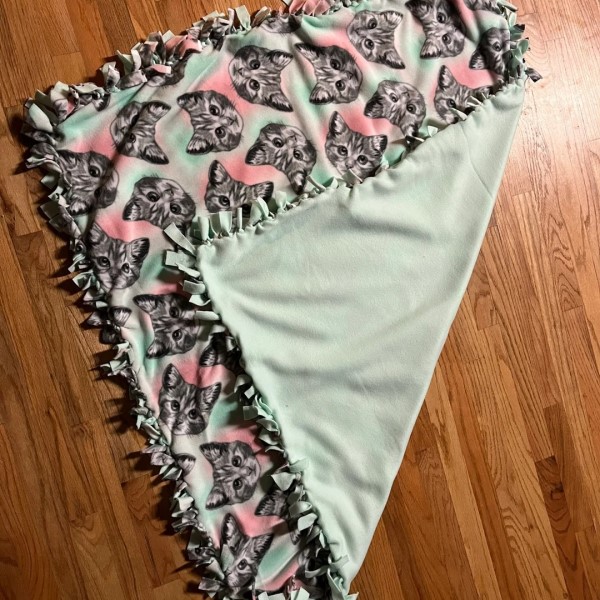
- Take One Strip from Each Layer
Grab one strip from the top piece of fleece and one from the bottom layer. - Tie a Double Knot
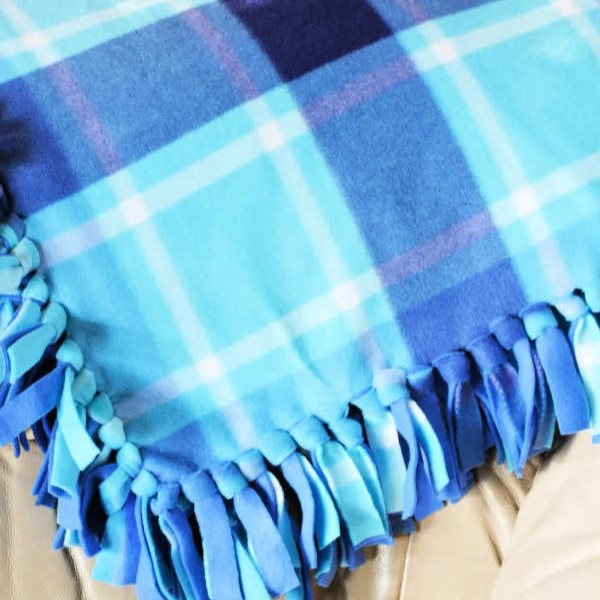
Tie the two pieces together in a double knot. Make sure the knot is tight enough to hold the fleece together but not so tight that it distorts the fabric. - Continue Around the Blanket
Keep tying strips together around the entire blanket. Alternate between using strips from the top and bottom layers to create a balanced appearance.
Step 5: Final Touches and Inspection
After tying all edges, your blanket is almost complete! Here’s what to do next:
Check for Loose Knots
- Inspect Each Knot Thoroughly
Go around the entire blanket and closely examine each knot. This close inspection is crucial as loose knots can compromise the integrity of your blanket. - Tighten Any Slack
If you detect any knots that feel loose or slack, gently tug on the strips to tighten them. This tightening will ensure that the layers of fleece are securely bonded together. - Assess Durability
Remember that the main purpose of these knots is to hold everything in place. Ensuring that each knot is secured will help prevent the blanket from falling apart, especially after multiple washes or uses.
Trim Any Extra Fringe
- Identify Long Strips
As you inspect the blanket, look for any fringe strips that are excessively long compared to the others. Noticing any uneven lengths is essential for a polished final appearance. - Use Sharp Scissors
Grab a pair of sharp fabric scissors to ensure clean cuts. Dull scissors can lead to frayed edges, which defeats the purpose of trimming. - Cut Carefully
Trim the long strips of fringe to match the length of the surrounding strips. This step will help maintain a uniform and tidy look, enhancing the overall aesthetics of your blanket.
Display Your Creation
- Proudly Showcase Your Blanket
Once your fleece tie blanket is complete and the finishing touches are done, it’s time to display it! You can drape it over a couch or chair as a stylish decoration. - Functional Use
Think about how this blanket can serve various functions. It can be perfect for cozying up while watching movies, adding warmth on chilly nights, or as an appealing throw in your living space. - Gifting Options
If you’ve created the blanket as a gift, consider wrapping it beautifully or pairing it with a nice card. A handmade tie blanket makes an exceptional gift for birthdays, holidays, or as a comforting gesture for a loved one. - Positive Reception
Whether for yourself or as a gift, this blanket is sure to be appreciated. Its cozy feel and the effort put into creating it will demonstrate thoughtfulness and personal touch.
FAQs About Fleece Fabric for Tie Blankets
How thick should fleece be for a tie blanket?
Fleece that is approximately 200-300 grams per square meter (GSM) is generally ideal for tie blankets. This thickness provides warmth without excessive weight, making it comfortable to use.
Can you make tie blankets with fleece?
Yes! Fleece is one of the best materials for making tie blankets because of its softness, durability, and ease of use.
What type of fleece is best for blankets?
Microfleece or anti-pill fleece are commonly recommended for tie blankets. These materials usually provide a softer feel and maintain quality well despite frequent washing.
What type of fabric is fleece fabric?
Fleece fabric is typically a synthetic material made from polyester. It is known for being lightweight, warm, and soft to the touch.
Conclusion: Enjoy Your Cozy Creation
Creating a cozy tie blanket using fleece fabric for tie blankets is a rewarding DIY project. With the right materials, some basic techniques, and a little creativity, you can craft a beautiful blanket that enhances your living space or serves as a thoughtful gift. This process is not only enjoyable but also allows you to showcase your personal style through colorful fabrics and unique designs. So, gather your materials, follow the steps outlined in this guide, and enjoy the satisfaction of making a cozy fleece tie blanket that you or your loved ones will cherish for years to come!